

If you have fallen in love with the soft curves and warm glow of a mushroom lamp, one question usually comes next: how much do mushroom lamps actually cost? The answer is surprisingly broad. You can find simple mushroom-shaped lights for less than £50, while large decorative, vintage-inspired or statement models can cost several hundred pounds.
That huge difference does not necessarily mean that one lamp is good and another is bad. Mushroom lamps now exist in almost every possible version: small bedside lights, rechargeable USB lamps, colourful glass designs, wooden lamps, metal statement pieces and sculptural designs intended to become one of the main decorative objects in a room. 🍄
As a general rule, you can expect to spend around £30–£100 for an affordable mushroom lamp, approximately £100–£300 for a more substantial decorative model, and £300–£800 or more for premium, vintage-inspired or highly decorative designs. The material, size, lighting system, construction and design usually explain most of the difference.
There is therefore no single “correct” price. A £60 mushroom lamp may be perfect for a bedside table, while someone looking for a large sculptural lamp for a living room may reasonably spend several hundred pounds. The important thing is understanding what you are actually paying for.
How Much Does a Mushroom Lamp Cost in the UK? 💷
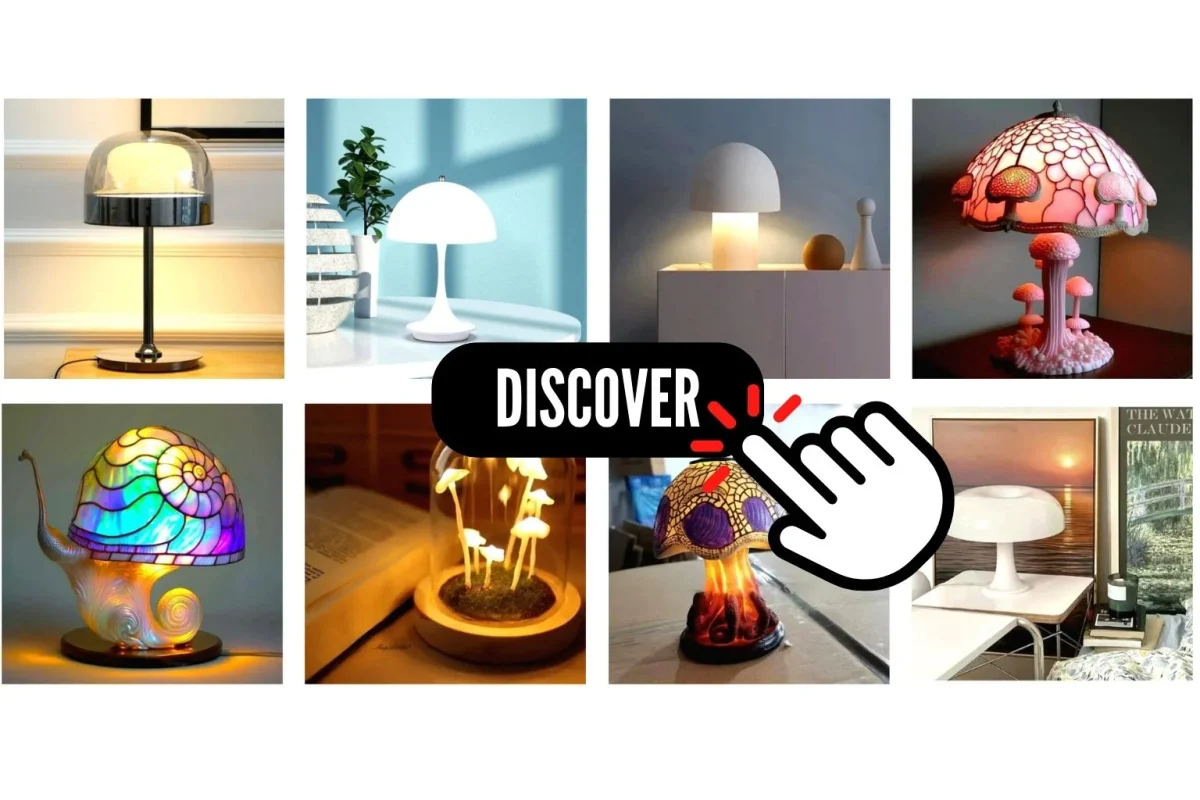
For most buyers, a realistic mushroom lamp budget falls somewhere between £50 and £150. This is the price range where you begin to find attractive lamps that work as genuine decorative objects rather than simply novelty lights.
But mushroom lamps have become such a broad design category that their prices now stretch much further in both directions. At the affordable end, simple plastic, USB-powered or compact models can remain below £100. At the other extreme, large metal lamps, elaborate designs and statement pieces can move well beyond £500.
The current range available from Mushroom Lamp illustrates this difference particularly well, with compact wooden and colourful models at the more accessible end and much larger decorative designs occupying the premium end of the range.
That is why asking “How much is a mushroom lamp?” is a little like asking how much a chair costs. You can buy a simple functional chair cheaply, or you can buy a sculptural chair designed almost as a piece of art. Both perform the same basic function, but their materials, proportions, craftsmanship and visual impact are completely different.
Mushroom Lamp Price Comparison at a Glance
Before looking at the details, this table gives you a useful idea of what you can generally expect at different price levels.
| Typical Price | Type of Mushroom Lamp | What You Can Expect | Best For |
|---|---|---|---|
| £20–£50 | Small or basic lamps | Simple materials, compact size, straightforward lighting | Small desks, children’s rooms, occasional decorative lighting |
| £50–£100 | Affordable decorative lamps | More interesting colours, shapes and finishes | Bedside tables, shelves, desks and cosy corners |
| £100–£300 | Mid-range statement lamps | Better proportions, materials and visual presence | Living rooms, sideboards, reading areas and design-led interiors |
| £300–£600 | Premium mushroom lamps | Large dimensions, metal or premium finishes, distinctive design | Statement lighting and carefully styled interiors |
| £600+ | High-end decorative pieces | Large scale, complex construction or highly distinctive design | Collectors, luxury interiors and centrepiece lighting |
These categories should be viewed as a guide rather than rigid rules. A beautifully designed small lamp can cost more than a relatively large mass-produced one, and material quality can sometimes matter more than dimensions.
What Do You Get from a Mushroom Lamp Under £100?
The sub-£100 category is arguably the most interesting place to start because it contains many lamps that are inexpensive enough for casual decorating but still visually distinctive enough to transform a small area of a room.
You will frequently find compact mushroom lamps, colourful lamps, wooden designs, USB-powered lights and smaller bedside models in this price range. Their biggest advantage is flexibility. You can experiment with the mushroom lamp trend without making the lamp the central investment in your room.
A small £50–£90 lamp can look particularly convincing on a bedside table, bookshelf or desk because those locations do not require enormous dimensions. In fact, placing a huge lamp on a small table can make the furniture appear cramped. A more modest design can therefore be the aesthetically better choice as well as the cheaper one.
Who should consider this price range?
This category makes sense if you want to introduce soft ambient lighting, add colour to a neutral room or simply see whether you enjoy the mushroom silhouette before buying something larger.
- 🛏️ Bedrooms and bedside tables
- 📚 Bookshelves and reading corners
- 💻 Home-office desks
- 🌈 Colourful or playful interiors
- 🎁 Gifts where an expensive designer lamp would be excessive
Do not assume that inexpensive automatically means unattractive. Because the mushroom shape itself is visually strong, even a relatively simple lamp can look intentional when its colour and proportions work with the surrounding furniture.
What Does a £100–£300 Mushroom Lamp Offer?
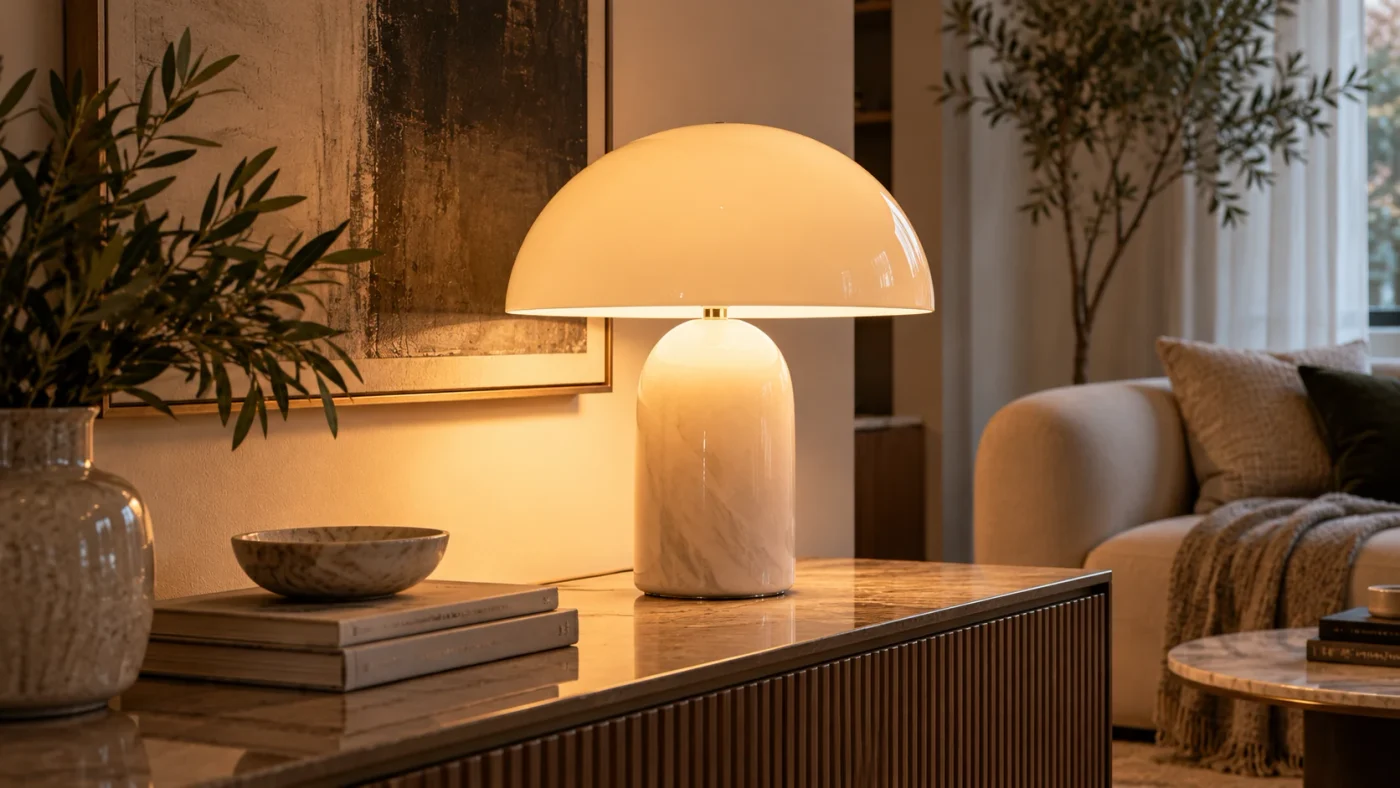
Once you enter the £100–£300 range, the lamp is more likely to become a noticeable piece of interior decoration rather than simply a source of extra light.
This is often where you begin seeing larger bases, better finishes, more substantial shades and designs with enough presence to sit confidently on a console table, large bedside cabinet or living-room side table.
The distinction is important because a decorative lamp performs two jobs simultaneously. When switched on, it creates light. When switched off, it remains visible for perhaps sixteen hours of the day as an object in the room. With a sculptural form such as a mushroom lamp, the appearance while switched off can matter almost as much as the light itself.
Interior tip: If the lamp will be clearly visible from several parts of the room, judge it as a piece of furniture or decoration rather than judging it only by brightness.
A mid-range lamp can therefore be worth paying more for when it occupies a visually important position. A lamp hidden beside a bed does not necessarily need the same visual sophistication as one sitting in the centre of a console table opposite your sofa.
Why Do Some Mushroom Lamps Cost £300–£800 or More?
At first glance, paying several hundred pounds for a mushroom-shaped lamp may appear surprising. But expensive mushroom lamps tend to belong to a different category from inexpensive decorative lights.
They are often larger, heavier and designed to create an immediate visual impact. Premium models may use metal, aluminium, thick glass, complex finishes or oversized components. These materials cost more to manufacture, package and transport than lightweight plastic.
There is also the issue of scale. Doubling the dimensions of a lamp does not simply double the manufacturing requirements. A larger shade may need greater structural strength, a heavier base to prevent tipping and significantly more material.
You are often paying for presence, not simply brightness
A £500 lamp does not need to produce ten times more light than a £50 lamp to justify its existence. Its purpose may be to act as a decorative focal point.
Imagine a minimalist living room with a sofa, low table and neutral walls. A small anonymous lamp might disappear visually. A large silver, yellow or aluminium mushroom lamp could completely alter the composition of the room even before it is switched on.
In that situation, comparing the two lamps purely according to lumens would miss most of what the expensive lamp is designed to do.
How Much Does the Material Affect a Mushroom Lamp’s Price?
Material is one of the biggest factors behind mushroom lamp prices. Two lamps of almost identical dimensions can have dramatically different prices simply because one is made from moulded plastic while the other uses glass or metal.
| Material | Typical Price Position | Main Advantages | Things to Consider |
|---|---|---|---|
| Plastic | £ | Lightweight, affordable, many colours | May feel less substantial |
| Wood | £–££ | Warm, natural appearance | Less suitable if you want a glossy retro effect |
| Glass | ££–£££ | Beautiful diffusion and colour depth | Fragile and usually heavier |
| Metal / aluminium | £££ | Strong sculptural presence and durability | Often considerably more expensive |
| Artisan / speciality glass | £££–££££ | Distinctive finish and decorative character | Premium pricing |
Plastic mushroom lamps
Plastic allows manufacturers to create the iconic rounded mushroom silhouette relatively efficiently. It can also be produced in bold colours, making it particularly suitable for playful interiors. Because it is lightweight, shipping and handling are generally easier too.
Wooden mushroom lamps
Wood changes the personality of the design completely. Instead of the glossy Space Age aesthetic commonly associated with mushroom lamps, timber creates something warmer, calmer and closer to Scandinavian or natural interior styles. 🌿
Metal mushroom lamps
Metal can provide thinner profiles, reflective finishes and a more architectural appearance. A metal lamp can also feel far more substantial when handled, but the additional manufacturing and finishing requirements usually increase its price.
How Much Do Glass Mushroom Lamps Cost?
Glass mushroom lamps generally sit above basic plastic designs in price, although inexpensive glass-inspired models do exist.
The attraction of glass is easy to understand once the lamp is illuminated. Instead of simply hiding the light source, coloured or translucent glass interacts with it. The shade itself begins to glow, creating a softer and more atmospheric appearance.
Glass can also create variations that are difficult to imitate convincingly with cheaper materials. Slight differences in colour, thickness and transparency can make the lamp feel more like an object than an appliance.
Premium artisan glass lamps can move into the several-hundred-pound range. For example, genuine Murano mushroom-style table lamps can sell at premium prices because you are no longer buying only the mushroom silhouette; the glassmaking tradition and production method form part of the product itself.
Is glass worth paying extra for?
It can be, particularly if the lamp will mainly be used for atmospheric evening lighting. A beautiful glass shade can create interesting reflections and a much softer impression than an opaque plastic shell.
However, glass is not automatically the best choice everywhere. If the lamp will be moved frequently, placed in a child’s room or positioned somewhere it can easily be knocked over, a lightweight and less fragile material may make more sense.
Are Vintage Mushroom Lamps More Expensive? 🕰️
They certainly can be. Mushroom lamps are closely associated with the rounded, futuristic interiors of the 1960s and 1970s, which means original vintage pieces can attract buyers interested in both lighting and collectible design.
But the word vintage needs to be treated carefully. A lamp described as “vintage style” is simply inspired by an earlier period. A genuinely vintage lamp was actually produced decades ago.
That distinction can dramatically affect the price.
An authentic older lamp by a recognised designer or manufacturer may command a premium because of its rarity, provenance, condition and collectability. A newly manufactured lamp with a similar silhouette can deliver the same general aesthetic for much less money.
Before paying extra for a vintage lamp, check:
- Whether the lamp is genuinely old or simply vintage-inspired.
- Whether its manufacturer or designer can be identified.
- The condition of the shade and base.
- Whether the electrical components have been inspected or replaced.
- Whether replacement bulbs are easy to obtain.
- Whether the asking price is based on documented rarity rather than appearance alone.
If your goal is simply to create a 1970s-inspired room, buying a contemporary lamp may be much easier than hunting for an original.
Does the Size of a Mushroom Lamp Affect Its Price?
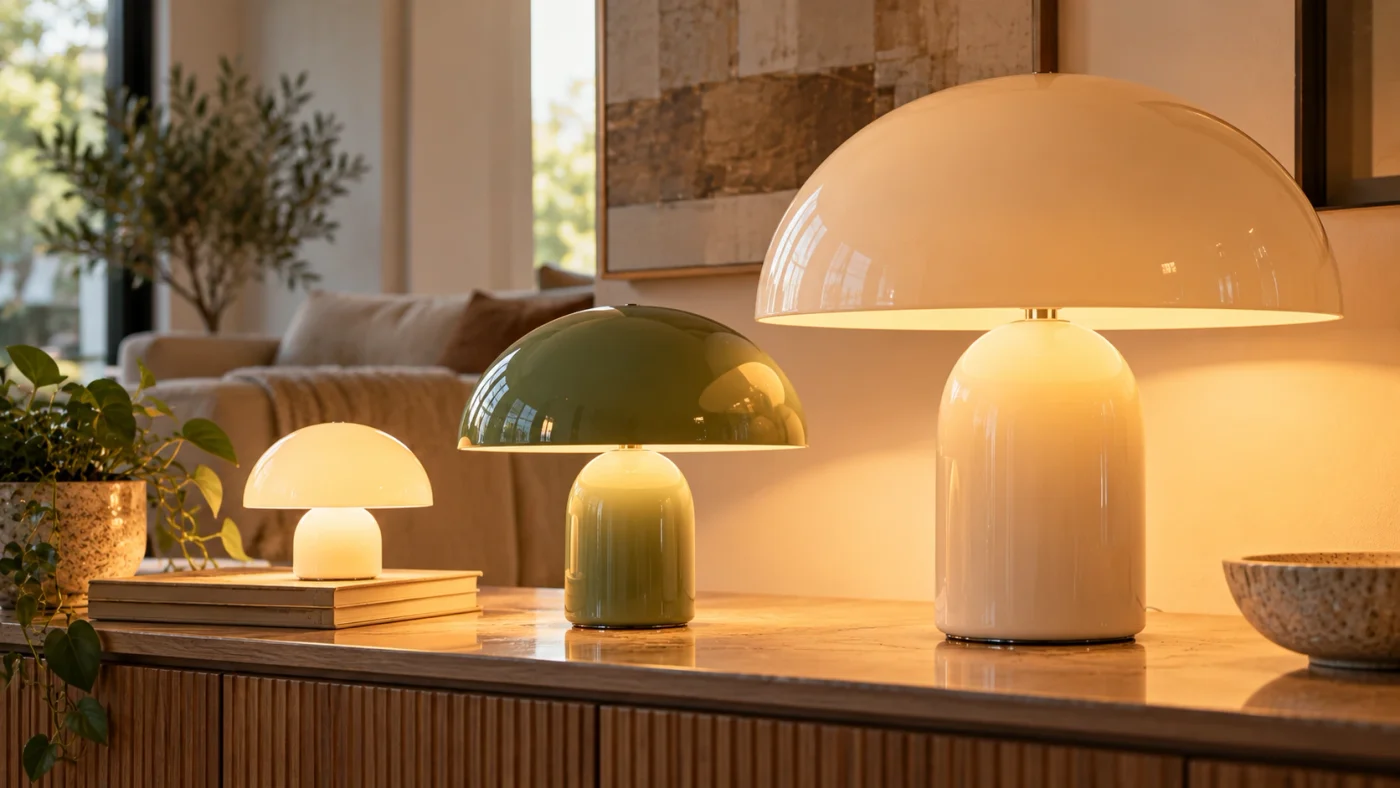
Usually, yes. A larger mushroom lamp requires more material and a stronger structure, but size also changes the role of the lamp in the room.
Small mushroom lamps are usually accent lights. They work beautifully beside a bed, on a shelf or on a compact table because their purpose is to add atmosphere without dominating the surrounding furniture.
A large mushroom lamp is much closer to a statement piece. Its shade becomes visually prominent, and the lamp can influence the entire composition of the room.
Small mushroom lamp
Ideal when space is limited. Small designs are generally more affordable and easier to move. They also make it possible to introduce a bright colour without allowing that colour to overwhelm the room.
Medium mushroom lamp
Probably the easiest size for most homes. A medium lamp can still fit comfortably on a side table while having enough presence to look intentionally decorative.
Large mushroom lamp
Large lamps work best when they have room around them. If you invest in a substantial design, avoid surrounding it with excessive ornaments. Allowing a little empty space around the lamp often makes it appear more luxurious.
Rechargeable vs Wired Mushroom Lamps: Which Costs More?
Rechargeable mushroom lamps have become popular because they can be placed almost anywhere without an obvious cable running across the furniture.
This can be particularly useful on a dining table, open shelving or a console positioned far from an electrical socket.
However, you are paying for more than the visible shell. A cordless lamp requires a battery, charging electronics and often touch controls or multiple brightness settings. These additions can make a rechargeable lamp more expensive than an equivalently sized basic wired lamp.
| Feature | Wired Mushroom Lamp | Rechargeable Mushroom Lamp |
|---|---|---|
| Placement | Needs access to a socket | Can be positioned almost anywhere |
| Running time | Unlimited while connected | Limited by battery capacity |
| Maintenance | Very simple | Requires charging |
| Typical use | Permanent room lighting | Flexible ambient lighting |
Neither format is automatically better. If the lamp is going to live permanently beside your bed, a cable may not matter. If you want to move it between a dining table, balcony door and bookshelf, cordless operation becomes much more valuable.
How Can You Tell Whether a Mushroom Lamp Is Worth the Price?
Price alone tells you surprisingly little. A much better approach is to examine the lamp as a combination of lighting, decoration and construction.
1. Look at the proportions
A convincing mushroom lamp normally has a strong relationship between its dome-shaped shade and its base. If the shade appears too small, the design may simply resemble an ordinary table lamp. If it is excessively large relative to the base, the lamp can look unstable.
2. Examine the finish
On glossy lamps, look for a smooth, consistent surface. On metal lamps, pay attention to joins, edges and coating. On glass, colour consistency and clarity can make a dramatic difference once the light is switched on.
3. Think about the lamp both switched on and switched off
This is one of the easiest things to forget when shopping for decorative lighting. A lamp may create beautiful light at night but remain a very visible object during daylight.
Ask yourself:
- Would I still like this shape if it produced no light at all?
- Does the colour work with my furniture?
- Does it look appropriately sized on the intended surface?
- Will the material still suit the room if I change other decorations later?
4. Check the quality of the light
A mushroom lamp is particularly good at creating ambient light. If you are expecting it to replace the main ceiling light in a large room, you may be disappointed regardless of how much you spend.
The dome can soften and redirect light, which is precisely why mushroom lamps feel so cosy. For reading or detailed work, however, you may still need dedicated task lighting.
5. Consider replaceability
If the lamp uses a conventional replaceable bulb, you can often modify its colour temperature and brightness later. With an integrated LED model, check what happens when the LED eventually reaches the end of its usable life.
How Much Should You Spend on a Mushroom Lamp for Each Room?
Your ideal budget should depend more on where the lamp will be used than on an arbitrary definition of quality.
For a bedroom: approximately £40–£120
A bedside mushroom lamp does not need to be enormous. In many bedrooms, a compact design actually looks better because it leaves enough space for a book, phone or glass of water on the bedside table.
Warm light is generally more important here than maximum brightness. A lamp that produces a calm evening atmosphere may deliver more value than a much larger model.
For a desk: approximately £40–£150
If the lamp is primarily decorative, almost any compact mushroom light can work. If you also intend to work under it, consider whether it provides enough usable illumination rather than choosing purely according to appearance.
For a living-room side table: approximately £70–£250
Living rooms usually have larger furniture and more visual competition, so slightly larger lamps often work well. This is where materials and finish become more noticeable.
For a statement console or sideboard: approximately £150–£600+
A lamp placed in a prominent position can justify a higher decorative budget. Instead of buying several smaller ornaments, a single distinctive mushroom lamp can provide the visual focus for the entire surface.
Decoration advice: The more expensive the lamp, the more carefully you should consider the space around it. Premium design often looks strongest when it is given room to breathe.
Can You Make a Mushroom Lamp for Less? 🔨
Yes. The simplicity of the basic mushroom silhouette has encouraged many people to create DIY versions using bowls, glass containers, existing lamp components and LED lighting.
A homemade lamp can sometimes cost considerably less than purchasing a finished statement piece, particularly if you already own some of the components. More importantly, DIY gives you control over colour and proportions.
However, the final quality depends heavily on the materials and electrical components used. A homemade lamp should never sacrifice electrical safety simply to save money.
Watch a Mushroom Lamp DIY Project
This video provides a useful visual example of how a mushroom-style lamp can be created using relatively simple materials:
The value of watching a DIY project is not necessarily that you should make the lamp yourself. It also reveals what goes into the object: the shade, base, light source, wiring and finishing all contribute to the final result. That makes it easier to understand why two superficially similar mushroom lamps can have very different prices.
Do Not Forget the Hidden Costs of a Mushroom Lamp
The advertised price is obviously important, but it is not always the total cost of owning the lamp.
Replacement bulbs
If the lamp uses a replaceable bulb, check which bulb type it accepts. Standard bulbs are usually inexpensive and easy to replace, whereas unusual fittings can make future maintenance less convenient.
Electricity
Modern LED lighting uses relatively little electricity compared with older incandescent technology, particularly when a lamp is being used primarily as low-level ambient lighting.
For example, a 6W LED used for five hours each evening consumes approximately:
6 watts × 5 hours × 365 days = 10.95 kWh per year.
The exact monetary cost depends on your electricity tariff, but the example demonstrates why the purchase price normally matters far more than electricity consumption for a small LED table lamp.
Shipping
Large glass or metal lamps can be costly to transport because they may require substantial protective packaging. When comparing prices between retailers, always look at the final checkout amount rather than the product price alone.
Replacement batteries
Rechargeable lamps eliminate visible cables but contain batteries that naturally lose capacity over time. If the battery cannot be replaced, this may eventually limit the practical lifespan of the lamp.
Cheap vs Expensive Mushroom Lamps: What Actually Changes?
The easiest mistake is assuming that an expensive mushroom lamp simply performs the same job slightly better. In reality, the difference is usually more complicated.
| Characteristic | Affordable Mushroom Lamp | Premium Mushroom Lamp |
|---|---|---|
| Main purpose | Lighting and simple decoration | Lighting plus major decorative impact |
| Materials | Often plastic, basic wood or simple glass | Metal, substantial glass or specialist finishes |
| Size | Usually compact | Often medium to large |
| Visual presence | Accent piece | Potential focal point |
| Best placement | Bedside, shelf or small desk | Living room, sideboard or prominent console |
A cheaper mushroom lamp can therefore be the smarter purchase when you only need a small pool of warm light. Conversely, spending more can make sense when the lamp will become one of the most visible pieces in a room.
How Much Should You Really Pay for a Mushroom Lamp?
If you want the shortest practical answer, start with your use case rather than your maximum budget.
Spend £40–£100 if you want a small, attractive lamp for a bedroom, desk or shelf.
Spend £100–£250 if you want something more substantial that contributes noticeably to the room even when it is switched off.
Spend £250–£600+ when you deliberately want a large decorative object, distinctive materials or a statement finish.
There is little reason to spend £500 on a lamp that will be hidden behind a computer monitor. At the same time, buying an extremely small £30 light for the centre of a large sideboard can leave the space looking unfinished.
The best value therefore comes from matching price, dimensions and visual importance.
Frequently Asked Questions About Mushroom Lamp Prices
How much does a mushroom lamp usually cost?
Most everyday mushroom lamps fall somewhere around £40 to £150, although prices can be considerably lower or higher. Large decorative lamps, metal models and premium designs can cost several hundred pounds.
Why are some mushroom lamps so expensive?
The most expensive mushroom lamps are generally priced according to more than their ability to produce light. Larger dimensions, heavier materials, glass, metal construction, complex finishes, distinctive design and lower-volume manufacturing can all increase the price. Some lamps are essentially sculptural decorative objects that also happen to provide light.
Can I get a good mushroom lamp for under £100?
Yes. Under £100 is a very useful price range for compact mushroom lamps. It is particularly suitable for bedside tables, bookshelves and desks, where an enormous lamp would often be unnecessary anyway.
How much do glass mushroom lamps cost?
Simple glass mushroom lamps can still be relatively affordable, while larger or artisan glass models can cost several hundred pounds. The type of glass, method of production, dimensions and origin all affect the final price.
Are vintage mushroom lamps expensive?
Some are. Authentic vintage lamps can command significantly higher prices when they come from recognised designers or manufacturers, are difficult to find or remain in excellent condition. A vintage-inspired contemporary lamp is normally much easier to obtain.
Are rechargeable mushroom lamps more expensive?
They can be slightly more expensive than basic wired designs because they need a rechargeable battery and charging electronics. Their main advantage is flexibility: they can be placed on tables and shelves where a visible power cable would be inconvenient.
Is a £500 mushroom lamp worth it?
That depends on what you expect from it. If you only need a small bedside light, probably not. If the lamp is large, beautifully made and intended to become one of the major decorative elements in your living room, the value equation changes completely. Expensive decorative lighting should be evaluated partly like furniture or artwork.
Do expensive mushroom lamps produce better light?
Not necessarily. A more expensive lamp can use better materials and have a more attractive shade without being dramatically brighter. In fact, many mushroom lamps deliberately produce soft ambient light rather than intense task lighting.
What is the cheapest type of mushroom lamp?
Small plastic, USB-powered and simple decorative designs are normally among the cheapest. Wooden compact models can also be reasonably priced depending on their construction.
What colour mushroom lamp is the best value?
Colour alone should not greatly determine value. Neutral white, black and wood finishes may be easier to integrate into changing interiors, while red, orange, yellow, pink or purple lamps can create a stronger decorative statement. Choose according to how long you expect the lamp to remain compatible with your room.
Should I buy one expensive mushroom lamp or several cheaper lamps?
For a large room, several light sources can often create a more comfortable atmosphere than a single intense lamp. However, if your goal is primarily decorative, one striking mushroom lamp surrounded by simpler lighting can create a cleaner look than several competing statement pieces.
Can a mushroom lamp be used as the main light in a room?
Usually, a mushroom table lamp works best as accent or ambient lighting. Its curved shade is often designed to soften and diffuse the light. Larger models may illuminate a substantial area, but most homes will still benefit from additional ceiling, floor or task lighting.
Conclusion: How Much Should You Budget for a Mushroom Lamp?
There is no single mushroom lamp price because the category now includes everything from simple £40 bedside lights to large decorative pieces costing several hundred pounds.
For most people, £50–£150 is a sensible starting budget. It provides enough choice to find a lamp with genuine decorative character without immediately moving into premium statement-lighting territory.
If your lamp will occupy an important place in the living room, however, spending more can make sense. Materials such as glass and metal, larger proportions and more distinctive construction can transform a mushroom lamp from a simple light into a central part of the interior.
Ultimately, the best mushroom lamp is not necessarily the cheapest or the most expensive. It is the one whose size, material, light and visual presence justify its price in the exact space where you plan to use it. 🍄✨
