
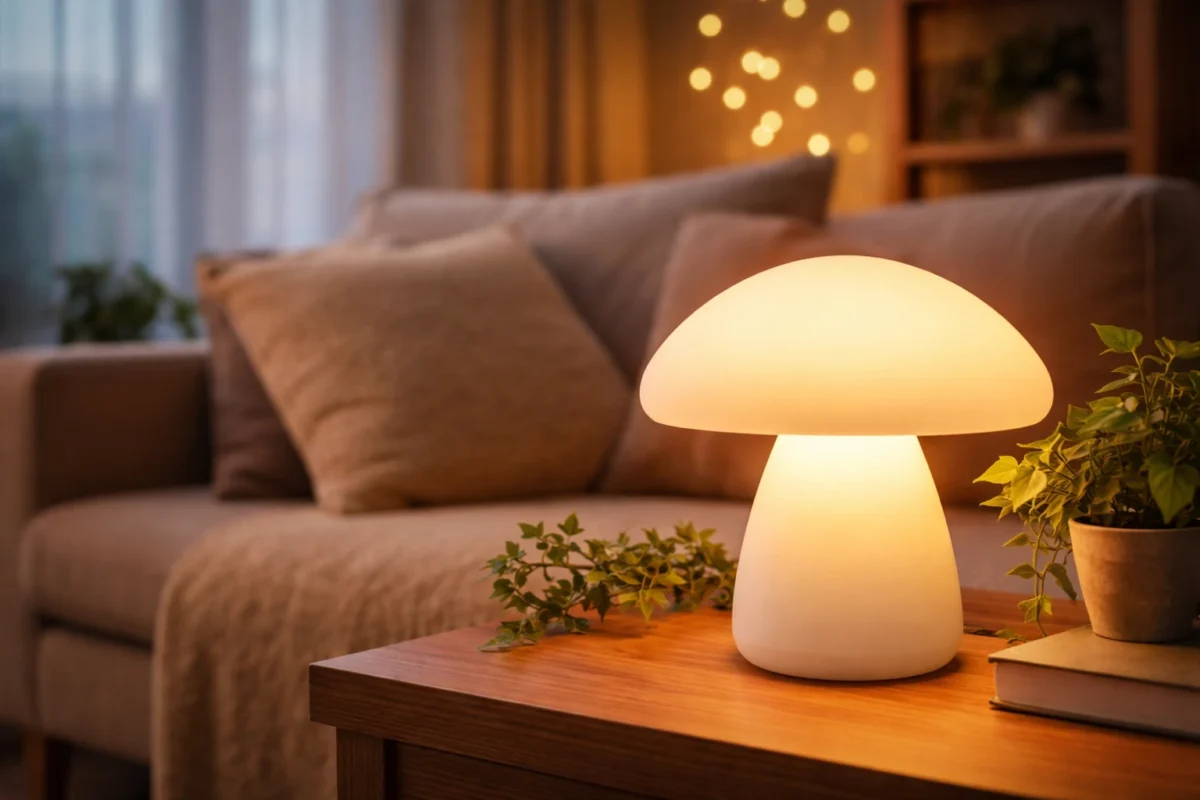
If you love the soft glow of a mushroom lamp, one question can quietly sit in the back of your mind: will it attract bugs at night? It is a fair concern, especially if you enjoy warm ambient lighting in a bedroom, hallway, reading nook or near a window.
The reassuring answer is this: most mushroom lights are not automatically bug magnets. In many homes, they are actually far less likely to draw insects than harsh outdoor lights, cool white bulbs or bright exposed fixtures. What matters most is not the cute mushroom shape itself, but the light intensity, colour temperature, bulb type, location and surrounding environment. ✨
So if you are picturing your room turning into a little insect meeting point every evening, breathe easy. In most indoor setups, a mushroom light creates a gentle decorative glow rather than the kind of aggressive beacon that pulls in every flying visitor from outside.
The Short Answer in a Few Seconds ✅
Do mushroom lights attract bugs? Sometimes a few insects may notice them, but in normal indoor use, mushroom lamps are usually not a major insect attractor. Bugs are more likely to react to:
- Bright, exposed light sources
- Cool white or bluish light
- Lights placed near open windows or doors
- Outdoor darkness that makes any artificial light stand out more strongly
A soft, warm, low-level mushroom lamp used indoors tends to feel much less “visible” to insects than a bright porch light, a cold LED flood light or a ceiling bulb blazing into the night. That is why many people choose this style of lighting for a calmer, more cocooning atmosphere. 🕯️
Why Are Bugs Drawn to Some Lights at Night? 🦋
To understand whether a mushroom lamp attracts bugs, it helps to step back and look at why insects gather around light at all. Many people imagine that bugs simply “love” lamps, but the reality is more interesting. Night-flying insects often use natural light cues to orient themselves. When a bright artificial light appears in the dark, it can confuse that instinct.
This is why you sometimes see moths fluttering in circles around a bulb, hovering awkwardly under a porch light or repeatedly bumping against a lit surface. The lamp is not always acting like a delicious reward. In many cases, the insect is becoming disoriented. That difference matters, because it explains why the type and direction of light can change the result so dramatically.
It also explains why not every lamp behaves the same way. A huge bright outdoor fixture that throws cool-toned light in every direction creates a very different visual signal than a compact table lamp with a warm glow and a shaded design. In other words, the word “light” is too broad on its own. The real question is: what kind of light are we talking about?
Helpful idea: bugs are often reacting to the quality and context of the light, not to the fact that a lamp happens to look like a mushroom.
So, Does a Mushroom Light Attract Bugs?
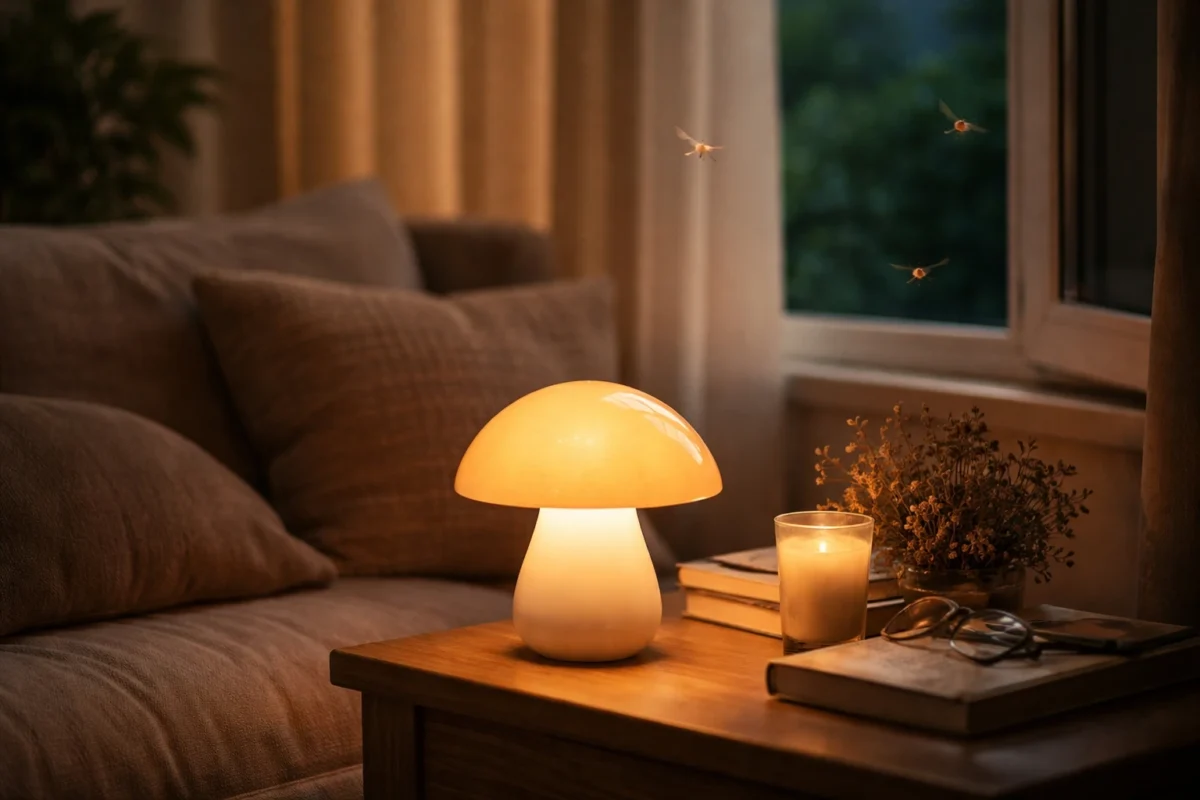
In most real homes, a mushroom light is less likely to attract bugs than people fear. That is especially true when the lamp is:
- Used indoors
- Set to a warm light tone
- Not extremely bright
- Positioned away from open windows
- Used as ambient lighting rather than as a powerful room-filling main light
The mushroom form itself often helps the overall mood too. Many designs create a diffused glow rather than a sharp exposed beam. Visually, they feel softer. Practically, that softness can mean the light is less aggressive in a dark environment. If your goal is to create a peaceful room with decorative illumination rather than flood a space with intense brightness, a mushroom lamp is often a smart choice.
That said, the answer is not a rigid “never”. If you place any lamp right beside an open summer window in an area with lots of flying insects, some bugs may still appear. A cosy lamp cannot rewrite nature. But the difference between “may occasionally be noticed” and “actively draws large numbers of bugs” is huge. Most mushroom lights fall much closer to the first category than the second.
Warm Light vs Cool Light: The Detail People Often Miss
One of the most useful details for any buyer is the difference between warm light and cool light. This sounds technical at first, but it is actually very practical. Warm light looks golden, gentle and relaxing. Cool light looks whiter, sometimes even slightly blue. If you have ever walked past a bright cold security light at night and felt it looked harsh, you already understand the difference emotionally.
For insects, that difference matters too. In general, cooler and brighter light tends to be more noticeable, while warmer light feels softer and often attracts fewer insects than cool-toned alternatives. That is one reason warm mushroom lamps feel so well suited to bedrooms, side tables, shelves and evening corners. They create a calm visual atmosphere without shouting into the darkness.
This is also why a stylish decorative lamp can fit beautifully into a room without creating the same effect as a bright overhead bulb. If your mushroom lamp uses a warm LED and is intended for mood lighting, it is already moving in a more insect-conscious direction than many harsh white lighting setups.
| Lighting Type | Look & Feel | Likely Bug Interest | Best Use |
|---|---|---|---|
| Warm mushroom lamp | Soft, cosy, ambient | Usually lower | Bedrooms, shelves, reading corners, mood lighting |
| Cool white LED bulb | Sharper, brighter, cleaner | Often more noticeable | Task lighting, workspaces |
| Bright porch or patio light | Strong outdoor visibility | Higher | Security or outdoor access |
| Decorative diffused table lamp | Gentle, indirect glow | Moderate to low indoors | Living rooms, hallways, evening ambience |
Indoor Mushroom Lamp vs Outdoor Light: A Huge Difference
Many people accidentally compare the wrong situations. They think of a lamp attracting moths because they have seen insects swarming around a garden light, a terrace fixture or a bright bulb near a front door. But a mushroom lamp inside your home is not working under the same conditions.
Outdoors, the light is competing with darkness across a wide area. It can be seen from farther away, especially if it is intense or unshielded. Indoors, the light is usually contained by walls, curtains, shades and furniture. If your windows are closed or covered, the lamp becomes much less relevant to the outside insect world.
This means context changes everything. A mushroom light on a bedside table in a softly lit room is one thing. A bright decorative lamp placed in a window, glowing directly into a dark garden with the window cracked open in midsummer, is another. The lamp category did not change, but the environment did.
If you are deciding where to place yours, think less about the lamp as an object and more about the light path: who can see it, from where, and under what conditions?
What Actually Makes a Lamp More Likely to Attract Insects?
If you want a realistic answer, you have to look at the practical triggers. Here are the biggest ones:
1. Brightness
The brighter the light, the more it stands out. A small, warm bedside glow is simply not announcing itself in the same way as a glaring bulb.
2. Colour Temperature
Warm light is usually gentler. Cooler, bluer light tends to be more disruptive and noticeable to insects.
3. Placement Near Windows
A lamp beside an open or uncovered window is easier for insects to detect. This is one of the biggest factors in real life.
4. Outdoor vs Indoor Conditions
A lamp used outdoors, or facing into outdoor darkness, naturally has a higher chance of drawing attention than one used deeper inside a room.
5. Exposed vs Diffused Bulb
A visible bare bulb can feel harsher and more direct. A mushroom lamp with a shaded, rounded, diffused glow often feels softer and less visually aggressive.
6. Seasonal Insect Activity
Summer evenings, humidity, nearby plants and open access points all play a role. Sometimes the “problem” is less about the lamp and more about the room conditions around it.
A Quick Video Explanation 🎥
If you enjoy seeing the science explained visually, this video gives useful background on why bugs seem to gather around light in the first place:
Watching something like this helps because it moves the conversation away from myths and toward a more nuanced understanding: not all lights behave the same, and not all insect reactions are equal.
Why Mushroom Lamps Often Feel More Comfortable in Real Homes
Beyond the bug question, there is another reason people keep coming back to mushroom lights: they create a room that feels gentler. And that softness changes the whole experience of evening lighting. Instead of flattening a space with one hard source, a mushroom lamp can add shape, glow and atmosphere.
In design terms, this matters because people do not choose decorative lighting only for brightness. They choose it for emotion. A lamp that feels cosy is often switched on longer, enjoyed more and integrated into daily life more naturally. That is why the best decorative lights are not just functional objects; they become part of the room’s personality.
From a practical point of view, this emotional comfort can align nicely with lower-intensity lighting choices. Softer lighting often means a more restful evening environment and, in many cases, less chance of creating a visually harsh beacon for insects. It is one of those rare moments where beauty and practicality meet in the same corner of the home. 🍄
Comparison: Which Lighting Setup Is More Likely to Attract Bugs?
| Setup | Atmosphere | Bug Attraction Risk | Why |
|---|---|---|---|
| Warm mushroom lamp on bedside table | Very cosy | Low | Low brightness, warm tone, indoor use |
| Mushroom lamp in open window | Charming but exposed | Medium | Visible from outside, especially at night |
| Bright cool LED by patio door | Functional but harsh | High | Stronger signal in darkness, cooler light |
| Soft lamp behind curtain or away from glass | Soft and private | Very low | Reduced visibility to outside insects |
This is the kind of comparison that helps in real life, because it turns a vague fear into practical decisions. You do not need to avoid cosy lamps. You just need to understand how the setup changes the outcome.
Simple Ways to Reduce Bugs Around a Mushroom Light 💡
If you want the look of a beautiful lamp without the annoyance of flying visitors, a few easy habits can make a surprising difference:
- Choose a warm-toned bulb rather than a cool white one
- Keep brightness moderate if the lamp is mainly for ambience
- Place the lamp away from open windows
- Close curtains or blinds at night if insects are active outside
- Avoid turning one decorative lamp into the room’s brightest visible light source near glass
- Use the lamp deeper inside the room to preserve its cosy effect
None of these tips are complicated, but together they can significantly improve comfort. The point is not to make your home feel clinical or over-managed. The point is to preserve the magic of warm decorative lighting while removing the small irritations that can ruin the mood.
Buying Advice: What to Look For in a Mushroom Lamp
If you are shopping with both style and practicality in mind, it helps to look beyond the silhouette. The prettiest lamp in a photo is not always the one that feels best to live with. Consider:
- Warm ambient glow instead of overly cold brightness
- A shape that diffuses light pleasantly
- The intended room: bedroom, nursery, hallway, lounge or office
- Whether you want mood lighting, a night light or a decorative accent
- How the lamp will sit relative to windows, mirrors and darker corners
If you are browsing for a design that feels soft, decorative and easier to live with in the evening, exploring a curated mushroom lamp range can make the decision much simpler. The right piece should not only look beautiful switched off, but also create a glow that still feels inviting after a long day.
FAQ: Do Mushroom Lights Attract Bugs?
Do mushroom lights attract moths?
They can attract some moths under the right conditions, especially if the lamp is bright, visible from outside and placed near an open window. But a warm, low-intensity indoor mushroom lamp is generally much less likely to attract moths than a strong outdoor light.
Are warm mushroom lamps better than cool white lamps for avoiding bugs?
In general, yes. Warm light is usually the safer choice if you want a softer ambience and less insect attention than cooler, harsher lighting.
Will a mushroom night light attract insects in a bedroom?
Usually not in any major way, especially if windows are closed. A small bedside mushroom night light tends to act more like gentle room ambience than an outdoor beacon.
Does the shape of the mushroom lamp matter?
The shape matters less than the brightness, bulb exposure and placement. That said, many mushroom lamp designs naturally diffuse light in a softer way, which can help create a less aggressive glow.
Should I avoid placing a mushroom lamp near the window?
If you are especially sensitive to bugs in summer, yes, that is a smart move. Keeping the lamp away from an open window or visible glass can reduce the chance of insects noticing it.
Do LED mushroom lamps attract fewer bugs?
Often they can be a better option, especially when they use a warm colour temperature and moderate brightness. The exact result still depends on how and where the lamp is used.
Can I use a mushroom lamp outdoors?
You can if the lamp is designed for it, but outdoor use naturally raises insect exposure. If your priority is minimising bugs, indoor use is the easier environment to control.
What is the best setup if I want a cosy lamp without attracting bugs?
A warm, dim, indoor mushroom lamp placed away from open windows is usually the best balance. You keep the atmosphere, but reduce the chance of inviting unwanted flying guests.
Final Thoughts 🍄
So, do mushroom lights attract bugs? The balanced answer is: sometimes a little, but usually far less than people imagine. A mushroom lamp is not automatically an insect magnet. In most homes, especially when used indoors with a warm and gentle glow, it is simply a beautiful decorative light source that adds comfort rather than chaos.
The real secret is not fear, but setup. If you choose warm light, avoid excessive brightness and think carefully about placement, you can enjoy the soft charm of a mushroom lamp without turning your room into a late-night insect hotspot.
And that is exactly why this style remains so loved: it brings a little poetry into the room. Soft light, calming shape, cosy atmosphere, and with the right choices, no dramatic swarm waiting at the window. ✨
